

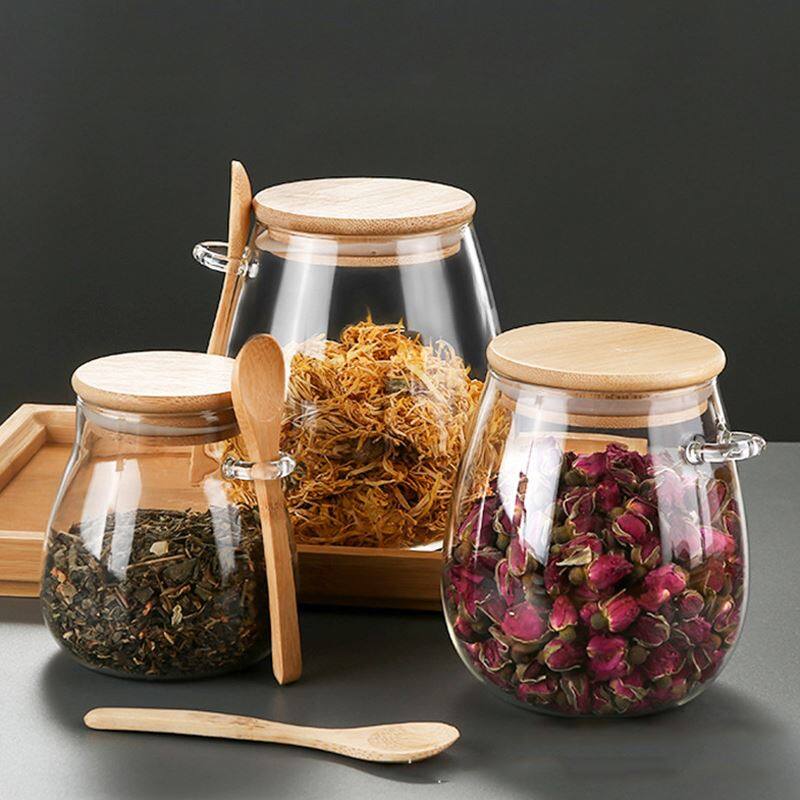
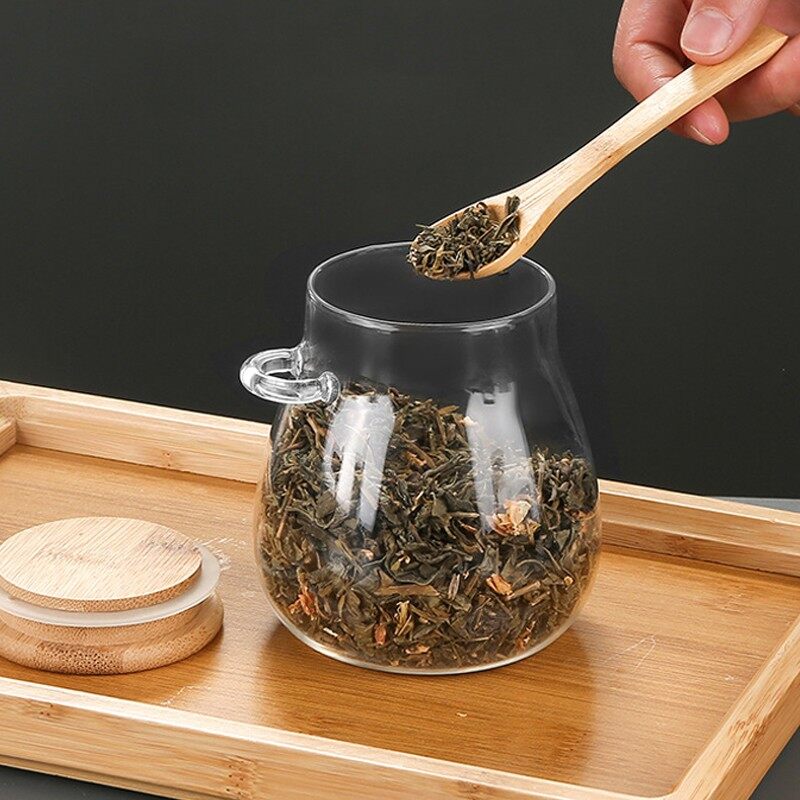
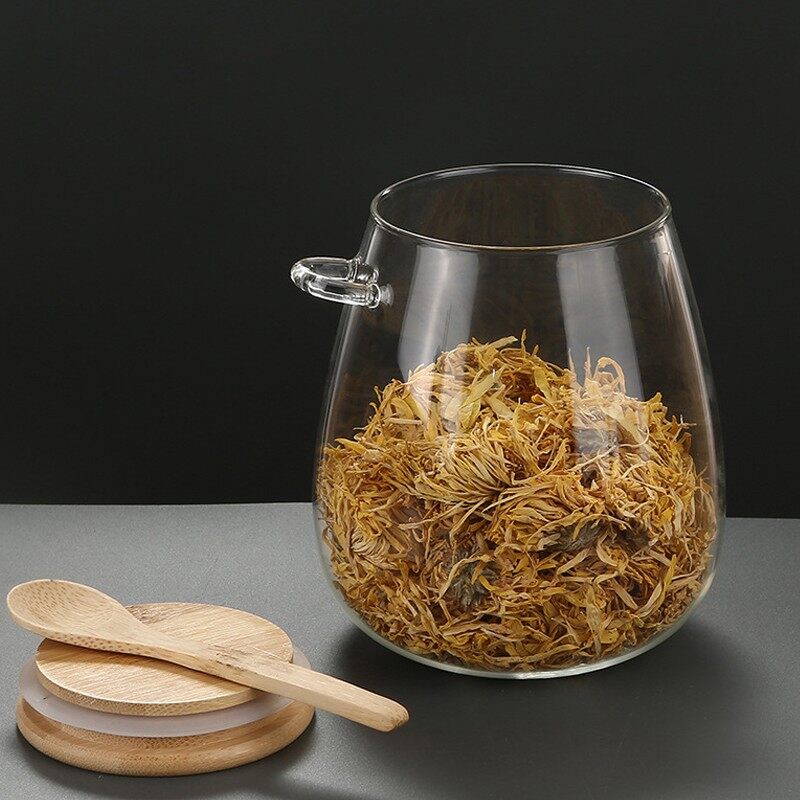

If you are searching for a practical yet aesthetically pleasing storage container to organise messy kitchen dry ingredients, this handcrafted borosilicate glass sealed jar paired with a dedicated bamboo spoon is a highly cost-effective option for household daily use. It adopts a unique bulbous curved body design that differs from regular straight-sided cylindrical jars; the graceful contour delivers a soft modern aesthetic, which works equally well for concealed cabinet storage and open countertop display. This multipurpose jar is widely applicable for storing nearly all common dry pantry staples, including assorted loose leaf teas such as rose tea, chrysanthemum tea and traditional green tea, roasted coffee beans, rock sugar, granulated sugar, dried fruits, nuts, baked snacks, wolfberries, dried tangerine peel and herbal medicinal ingredients
The whole jar body is crafted from premium food-grade high borosilicate glass, a high-performance material favoured for kitchen food containers globally. Its core advantage lies in outstanding thermal shock resistance; it can withstand drastic temperature fluctuations between low-temperature refrigeration environments and moderately warm room temperature without cracking from sudden cold and heat alternation. The glass contains no lead, cadmium or other toxic heavy metal substances, with stable chemical inertness. It will not release harmful substances or produce chemical reactions when in long-term contact with tea, sugar and edible dry goods, fully guaranteeing the safety of stored food. The glass wall achieves high light transmittance, presenting crystal-clear visibility; you can check the residual quantity and condition of internal ingredients at a glance without repeatedly opening the lid and breaking the sealed environment, which also helps avoid unnecessary air ingress that accelerates ingredient deterioration


The top sealing component consists of a solid natural bamboo lid that undergoes fine manual sanding on all edges and surfaces to eliminate sharp burrs. A food-grade silicone gasket is embedded inside the bamboo lid groove. When the lid is fully pressed down, the silicone ring fits tightly against the jar mouth to form a complete airtight barrier. This reliable sealing structure locks out external humid air, kitchen grease fumes, dust and tiny pantry bugs effectively, preventing tea leaves from losing natural aroma, nuts from turning damp and stale, and granular seasonings from caking due to moisture invasion, greatly extending the shelf life of stored dry food.
One of the most user-friendly highlights is the fixed side glass bracket designed exclusively for matching bamboo scoops. Many families often encounter the trouble of dedicated spoons going missing, being contaminated by other tableware or being placed randomly on countertops. This integrated holder firmly fixes the bamboo spoon beside the jar at all times. Whenever you need to take out tea leaves, coffee powder, sugar or dried ingredients, you can grab the spoon directly without rummaging through drawers, significantly improving daily cooking and brewing efficiency. The supporting spoon is made of polished natural bamboo with smooth surfaces that will not scratch the inner glass wall during scooping operations
Before shipment, each batch of products undergoes three rounds of rigorous quality inspection to minimise operational risks for cooperative distributors:
Glass inspection: Screen out defective products with cracks, surface bubbles, scratches and uneven wall thickness; re-polish jar mouths to guarantee perfect fitting between bamboo lids and silicone rings;
Accessory inspection: Check bamboo lids and scoops for cracks, burrs and mildew risks; test silicone ring elasticity and overall sealing performance one by one through inverted water leakage tests;
Export-level reinforced packaging: Independent full EPE foam wrapping + localised foam protection for curved vulnerable positions + partition fixed thickened cartons with strapping reinforcement. This packaging method controls the overall logistics breakage rate within an ultra-low acceptable range during long-distance sea freight and repeated transshipment


