

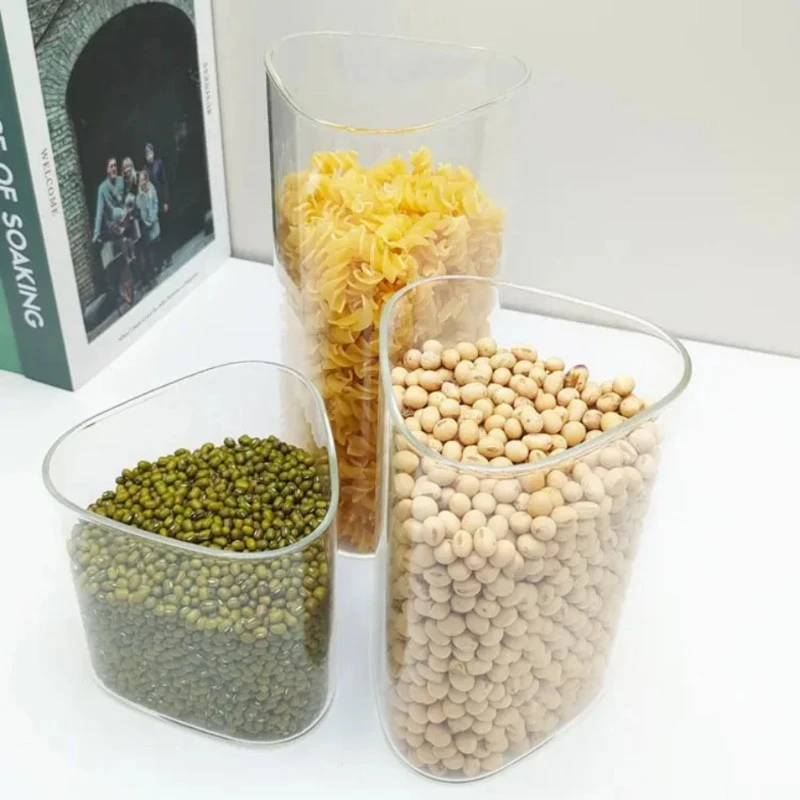
The kitchen is where glass storage containers are most frequently used. Grains, cereals, dried goods, tea, and baking spices are all suitable for storage in sealed glass containers. They won't react chemically with food, eliminating concerns about harmful substances leaching out. Many baking enthusiasts purchase sets of glass storage containers of varying sizes, neatly arranging them in cabinets or on shelves. This not only keeps food fresh and prevents moisture buildup but also serves as a decorative element in the kitchen. Thickened glass storage containers are ideal for pickling kimchi, jams, and honey. They are acid and alkali resistant, preventing corrosion during long-term storage, and can be reused after cleaning, offering excellent value.
High borosilicate glass storage containers incorporate boron oxide, resulting in an extremely low coefficient of thermal expansion, capable of withstanding instantaneous temperature differences from -20℃ to 400℃. They are microwave and oven safe, making them a top choice for heat-resistant kitchen containers.
The ease of use and the combination of practicality, aesthetics, and safety are irreplaceable advantages of glass storage containers.
Not all glass is "high borosilicate." The cheap, large containers you buy at the supermarket are mostly soda-lime glass. This type of glass is extremely vulnerable to temperature fluctuations. If you pour boiling water directly into a container straight from the refrigerator, you'll likely only hear a splash and then regret it, seeing a table full of water stains and broken glass. The most prominent items in my kitchen are mostly high borosilicate glass. It can withstand sudden temperature differences from -20°C to 400°C. A bowl of hot porridge packed before leaving home in the morning can be microwaved for two minutes at noon – no need to change bowls! Convenience is paramount.
Of course, extreme heat resistance isn't always necessary. For storing dry goods, noodles, or grains in a cupboard, thick tempered glass is perfectly adequate. It's drop-resistant; even if it breaks, it shatters into small, blunt-angled pieces, unlike ordinary glass which can shatter into countless fragments. My several Lock & Lock containers with silicone rings are specifically for storing braised food or packed lunches; the four-sided locking system prevents leaks no matter how much you shake them.
Whether for personal household storage or bulk display and inventory preparation in a shop, these transparent storage containers are suitable for all needs. A simple piece of glass, paired with suitable sealing accessories, can solve the storage problems of various small items and ingredients, balancing practicality and aesthetics. This is the key reason why more and more people are abandoning ordinary plastic storage containers in favor of glass ones.


