

Hey there, tea lovers! If you're like me, you appreciate a good cup of tea in a nice teacup. And when it comes to teacups, glass ones have a special charm. As a glass teacup supplier, I've always been fascinated by the history of these beautiful vessels. So, let's take a journey back in time and explore the story of glass teacups.
Early Beginnings of Glassmaking
The art of glassmaking dates way back, around 3500 BC in Mesopotamia. People there were making small glass beads and trinkets. But it wasn't until around 1500 BC in Egypt that they started making larger glass objects. These early glass items were mainly used for decorative purposes rather than for drinking tea, as tea wasn't even a thing in those regions at that time.

The Egyptians used a technique called core - forming. They'd wrap molten glass around a core made of sand and clay, then shape it and let it cool. This method allowed them to create various shapes, but it was a slow and labor - intensive process.
Glass in Ancient China
Fast forward to ancient China, where tea culture was booming. Tea was first discovered in China around 2737 BC, according to legend. In the early days, tea was drunk from ceramic or bamboo cups. But as the Chinese became more advanced in their craftsmanship, they started to experiment with glass.
China had a long history of glassmaking, too. By the Han Dynasty (202 BC - 220 AD), glass objects were being produced. However, glass was still relatively rare and expensive, so it wasn't commonly used for tea cups. Most people stuck with ceramic, which was more affordable and easier to make.
The Spread of Glass Teacups in Asia
As time went on, glassmaking techniques improved. In the Tang Dynasty (618 - 907 AD), glassware became more popular in China. The Chinese started to make glass vessels that could be used for drinking tea. These glass teacups were often simple in design but had a certain elegance.
From China, tea culture and the use of glass teacups spread to other Asian countries like Japan and Korea. In Japan, the tea ceremony, or Chanoyu, became an important part of their culture. While traditional Japanese tea ceremonies often use ceramic bowls, glass teacups also found their place, especially for certain types of tea.
Glass Teacups in the Middle East
In the Middle East, glassmaking had also been thriving. The Arabs were great glassmakers, and they developed new techniques like glass blowing. This was a game - changer as it allowed for the creation of more complex and delicate glass shapes.
By the 9th century, glass teacups were being used in the Middle East. The Middle Eastern glass teacups were often highly decorated, with intricate patterns and colors. They were also known for their durability, which made them suitable for daily use.
Glass Teacups in Europe
Glassmaking in Europe really took off during the Renaissance. Venetian glassmakers were at the forefront of this industry. They were famous for their Murano glass, which was known for its clarity and beauty.
In the 17th and 18th centuries, as trade between Europe and Asia increased, tea became popular in Europe. At first, the Europeans imported tea in ceramic teapots and cups from China. But as their own glassmaking skills improved, they started to produce their own glass teacups.
European glass teacups often had more elaborate designs compared to their Asian counterparts. They were sometimes decorated with gold leaf, engravings, or painted patterns. These teacups were not only functional but also a status symbol.
Modern Glass Teacups
Today, glass teacups are more popular than ever. With advancements in technology, we can now produce high - quality glass teacups that are both beautiful and practical.
One of the most popular types of glass used for teacups today is high - borosilicate glass. It's known for its thermal resistance, which means it can withstand sudden changes in temperature without cracking. This makes it perfect for brewing hot tea.
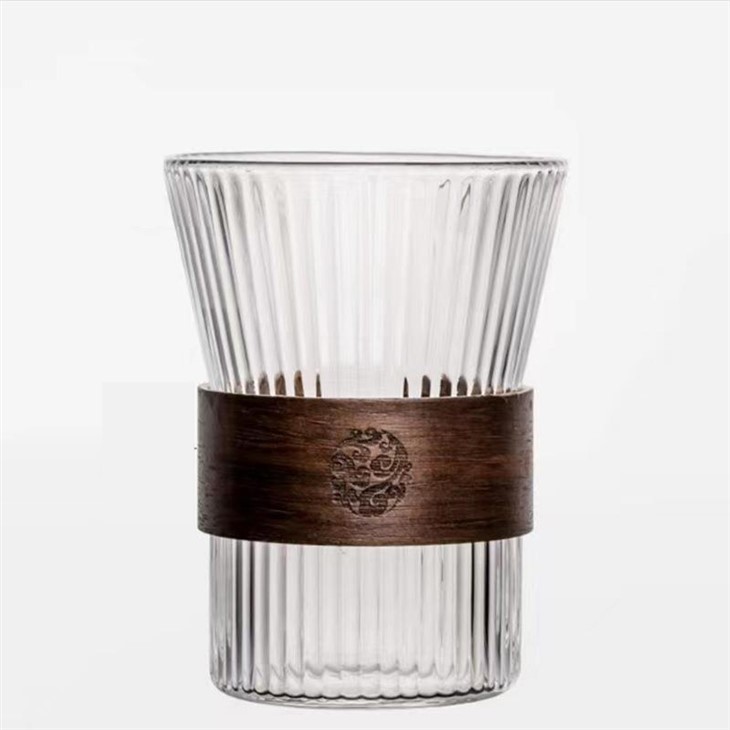
As a glass teacup supplier, I offer a wide range of glass teacups. For example, we have the Striped Wooden Set High Borosilicate Teacup. This set combines the beauty of glass with the warmth of wood, giving it a unique and stylish look.
Another great option is the Eco Friendly Borosilicate Glass Cup. It's not only good for your tea but also for the environment, as it's made from sustainable materials.
And if you're looking for something that can keep your tea warm for longer, check out the Insulated Glass Tea Cup with Wooden Case. The wooden case adds an extra layer of insulation and a touch of elegance.
Conclusion
The history of glass teacups is a long and fascinating one. From the early days of glassmaking in Egypt and China to the modern, high - tech glass teacups we have today, these vessels have come a long way.
Whether you're a tea connoisseur who appreciates the beauty of a well - crafted glass teacup or just someone who enjoys a simple cup of tea, there's a glass teacup out there for you.
If you're interested in purchasing high - quality glass teacups for your business or personal use, don't hesitate to reach out. We're always happy to discuss your needs and find the perfect glass teacups for you.
References
- "A History of Glass" by Hugh R. Taylor
- "The Story of Tea" by Mary Lou Heiss and Robert J. Heiss
- "Chinese Glassware" by Yang Boda