

High borosilicate teapots are a popular choice among tea enthusiasts due to their excellent heat resistance, transparency, and durability. However, over time, these teapots can accumulate stains from tea, coffee, or other beverages, which not only affect their appearance but also may impact the taste of the tea. As a high borosilicate teapot supplier, I understand the importance of keeping these teapots clean and stain - free. In this blog, I will share some effective methods to remove stains from high borosilicate teapots.
Understanding High Borosilicate Glass
Before we delve into the stain - removal methods, it's essential to understand the properties of high borosilicate glass. High borosilicate glass is made by adding boron trioxide to the glass mixture, which significantly enhances its thermal stability and chemical resistance. This type of glass can withstand rapid temperature changes without cracking, making it ideal for use in teapots. However, it is still susceptible to staining from tannins in tea and other substances.
Common Types of Stains and Their Causes
- Tea Stains: Tea contains tannins, which are natural compounds that can leave brownish - yellow stains on the surface of the teapot. The longer the tea steeps in the teapot, the more likely it is to leave stains.
- Coffee Stains: Similar to tea, coffee also contains tannins and other pigments that can cause dark stains on the teapot.
- Hard Water Stains: If you use hard water to make tea, mineral deposits such as calcium and magnesium can accumulate on the teapot's surface, leaving white or cloudy stains.
Effective Stain - Removal Methods
Method 1: Using Baking Soda
Baking soda is a natural and effective cleaning agent that can help remove stains from high borosilicate teapots.
- Steps:
- First, fill the teapot with warm water until it is about half - full.
- Add one to two tablespoons of baking soda to the water.
- Stir the mixture gently to dissolve the baking soda.
- Let the solution sit in the teapot for at least 30 minutes. For stubborn stains, you can leave it overnight.
- After the soaking time, use a soft sponge or a non - abrasive brush to gently scrub the inside of the teapot. Pay special attention to the areas with stains.
- Rinse the teapot thoroughly with clean water until all the baking soda residue is removed.
Method 2: Vinegar Solution
Vinegar is another powerful cleaning agent that can break down stains and remove mineral deposits.
- Steps:
- Mix equal parts of white vinegar and water in the teapot. For example, if you use one cup of water, add one cup of white vinegar.
- Let the vinegar solution sit in the teapot for about an hour. The acidic nature of vinegar will help dissolve the stains and mineral deposits.
- After the soaking time, pour out the vinegar solution and rinse the teapot with warm water.
- If there are still some stains remaining, you can use a soft sponge to gently scrub the teapot.
- Finally, rinse the teapot again with clean water to remove any vinegar smell.
Method 3: Lemon Juice
Lemon juice is a natural and gentle alternative to vinegar and baking soda. It contains citric acid, which can help remove stains and leave a fresh smell.
- Steps:
- Squeeze the juice of one or two lemons into the teapot.
- Add enough warm water to fill the teapot about halfway.
- Stir the mixture well and let it sit for 30 minutes to an hour.
- Use a soft sponge to scrub the inside of the teapot.
- Rinse the teapot thoroughly with clean water.
Method 4: Dish Soap and Hot Water
For light stains, a simple solution of dish soap and hot water can be effective.
- Steps:
- Fill the teapot with hot water and add a few drops of mild dish soap.
- Let the soapy water sit in the teapot for a few minutes.
- Use a soft sponge to scrub the inside of the teapot.
- Rinse the teapot thoroughly with clean water to remove all the soap residue.
Precautions When Cleaning High Borosilicate Teapots
- Avoid Abrasive Materials: Do not use abrasive sponges, steel wool, or harsh chemicals on high borosilicate teapots, as they can scratch the surface of the glass and damage the teapot.
- Rinse Thoroughly: After using any cleaning solution, make sure to rinse the teapot thoroughly to remove all the residue. Residual cleaning agents can affect the taste of the tea.
- Handle with Care: High borosilicate glass is strong but still fragile. When cleaning the teapot, handle it gently to avoid dropping or knocking it against hard surfaces.
Maintaining a Stain - Free Teapot
- Clean After Each Use: To prevent stains from building up, it's best to clean the teapot immediately after each use. Simply rinse the teapot with warm water and a small amount of dish soap.
- Use a Tea Infuser: Using a tea infuser can help reduce the contact between the tea leaves and the teapot's surface, minimizing the chances of staining.
- Filter Your Water: If you have hard water, consider using a water filter to reduce the mineral content in the water, which can help prevent hard water stains.
Our High - Quality High Borosilicate Teapots
As a high borosilicate teapot supplier, we offer a wide range of high - quality teapots to meet different needs. Our teapots are made from premium high borosilicate glass, which ensures excellent heat resistance and durability.
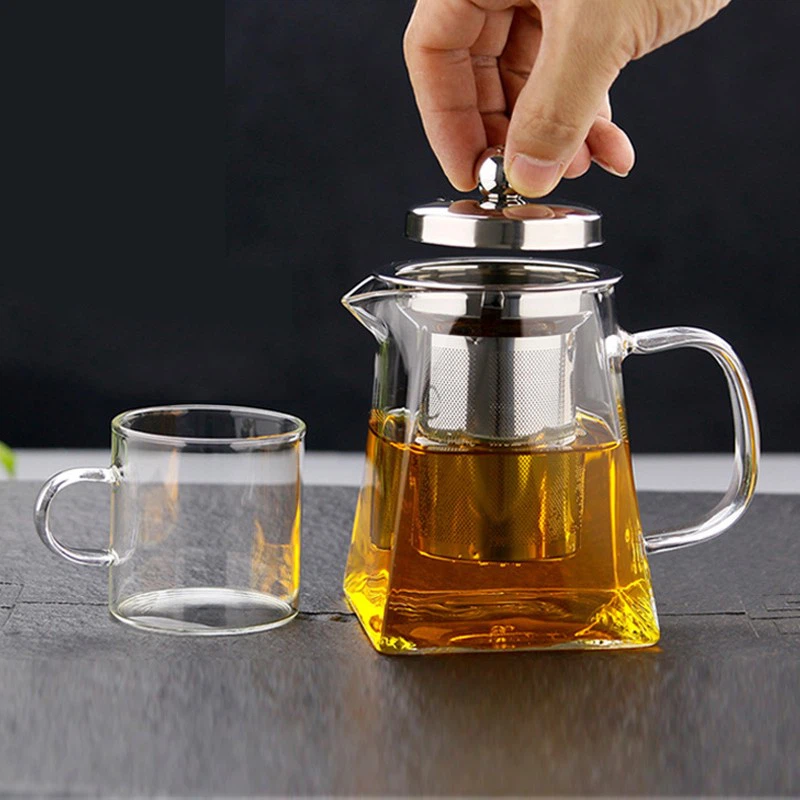
You can explore our product range, including the Retro Glass Teapot Set, Glass Teapot with Tea Separator, and Household Glass Teapot with Lid. These teapots are not only functional but also aesthetically pleasing, adding a touch of elegance to your tea - drinking experience.
If you are interested in purchasing our high borosilicate teapots or have any questions about stain removal or teapot maintenance, please feel free to contact us for procurement and negotiation. We are committed to providing you with the best products and services.

References
- "The Chemistry of Tea and Coffee Stains," Journal of Food Science, Volume 50, Issue 3.
- "Cleaning and Maintenance of Glassware," Handbook of Glass Science and Technology, edited by David R. Uhlmann and Neil J. Kreidl.
- "Properties and Applications of High Borosilicate Glass," Journal of Materials Science, Volume 25, Issue 4.