

As a trusted supplier of Pet Food Glass Sealed Jars, ensuring the high quality of the glass used in our products is of utmost importance. High - quality glass not only provides a safe and durable container for pet food but also maintains the freshness and quality of the contents. In this blog, I'll share some key aspects that we focus on to guarantee the glass in our pet food sealed jars meets the highest standards.
Raw Material Selection
The foundation of high - quality glass lies in the raw materials. We carefully select the sand, soda ash, limestone, and other additives used in the glass - making process. The sand, which is the primary ingredient, must be of high purity. Impurities in the sand can lead to defects in the glass, such as bubbles, streaks, or inconsistent color. We source our sand from quarries known for their high - quality deposits and conduct strict quality control checks upon arrival.
Soda ash is used to lower the melting point of the sand, making it easier to form the glass. We choose soda ash with a high degree of chemical purity to ensure a stable melting process and a homogeneous glass composition. Limestone is added to increase the chemical durability of the glass, protecting it from corrosion and ensuring a long - lasting container for pet food.
In addition to these basic raw materials, we also use certain additives to enhance the properties of the glass. For example, boron compounds are added to produce borosilicate glass, which has excellent thermal resistance and chemical stability. Borosilicate glass can withstand sudden temperature changes without cracking, making it ideal for pet food jars that may be exposed to different storage conditions. You can check out our Transparent Borosilicate Sealed Jar which is made using this high - quality borosilicate glass.
Manufacturing Process Control
The manufacturing process is a critical step in ensuring the quality of the glass. We use advanced glass - making technologies and equipment to maintain strict control over every stage of production.
The melting process is carefully monitored to ensure that the raw materials are completely melted and mixed evenly. The temperature in the furnace is precisely controlled to achieve the desired viscosity of the molten glass. If the temperature is too low, the glass may not melt completely, resulting in inclusions and defects. On the other hand, if the temperature is too high, the glass may lose some of its properties and become difficult to shape.
After melting, the molten glass is formed into jars through a process such as blow - molding or pressing. We use high - precision molds to ensure the jars have a consistent shape and size. The walls of the jars are made to be of uniform thickness, which is essential for maintaining the strength and durability of the glass. Any variations in wall thickness can lead to weak points in the jar, increasing the risk of breakage.
During the forming process, we also pay close attention to the surface finish of the glass. A smooth surface not only gives the jar an attractive appearance but also reduces the risk of scratches and contamination. We use polishing techniques to achieve a high - quality surface finish on our pet food glass sealed jars.
Quality Testing
Quality testing is an integral part of our production process. We conduct a series of tests at different stages of production to ensure that the glass meets our strict quality standards.
Visual inspection is the first step in quality control. Our trained inspectors carefully examine each jar for visible defects such as cracks, bubbles, and scratches. Any jars with visible defects are immediately removed from the production line.
We also perform physical and chemical tests on the glass. For example, we test the strength of the glass by subjecting it to a certain amount of pressure. This helps us ensure that the jars can withstand the normal handling and storage conditions without breaking. Chemical tests are conducted to analyze the composition of the glass and ensure its chemical stability. We check for the presence of harmful substances such as heavy metals, which could be harmful to pets if they leach into the food.
Thermal shock testing is another important test for our glass jars. We expose the jars to sudden temperature changes to simulate real - world conditions. Jars that pass this test demonstrate excellent thermal resistance, which is crucial for maintaining the integrity of the container and the quality of the pet food inside.
Packaging and Storage
Proper packaging and storage are also important factors in ensuring the quality of the glass jars. We use high - quality packaging materials to protect the jars during transportation and storage. Each jar is individually wrapped to prevent scratches and breakage. We also use shock - absorbing materials in the packaging to cushion the jars from any impacts.
During storage, we store the jars in a clean and dry environment. The temperature and humidity are carefully controlled to prevent any damage to the glass. We also stack the jars in a way that minimizes the risk of breakage, ensuring that they are stable and secure.
Design and Functionality
In addition to the quality of the glass itself, the design and functionality of the pet food sealed jars are also important considerations. We design our jars with features that enhance their usability and safety.
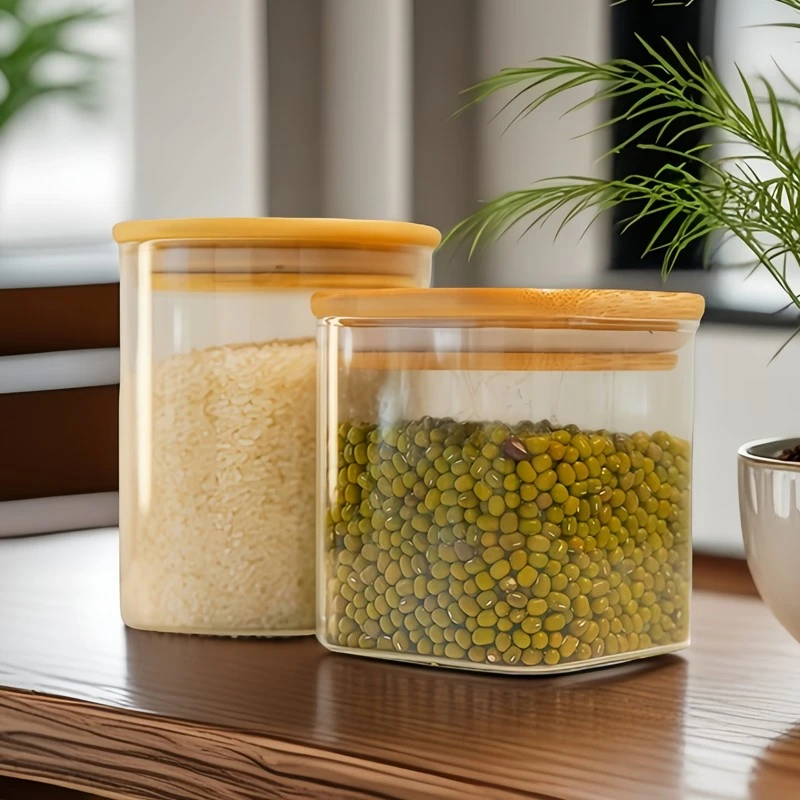
The lids of our jars are designed to provide a tight seal, preventing air and moisture from entering the jar and keeping the pet food fresh. We offer different types of lids, such as the Glass Storage Jar with Wood Lid and the Bamboo Lid Borosilicate Storage Jar. These lids not only provide a good seal but also add an aesthetic appeal to the jars.
The shape and size of the jars are designed to be convenient for both storage and use. We offer a variety of sizes to meet the different needs of our customers, from small jars for sample sizes to large jars for bulk storage. The jars are also easy to clean, which is important for maintaining the hygiene of the pet food container.
Conclusion
Ensuring the high quality of the glass in our pet food sealed jars is a multi - faceted process that involves careful raw material selection, strict manufacturing process control, comprehensive quality testing, proper packaging and storage, and thoughtful design. By focusing on these aspects, we are able to provide our customers with high - quality glass jars that are safe, durable, and functional.

If you are interested in our Pet Food Glass Sealed Jars and would like to discuss a potential purchase, please feel free to contact us. We are always ready to provide you with more information and work with you to meet your specific requirements.
References
- Glass Manufacturing Handbook: A Comprehensive Guide to Glass Production Processes, by John Smith.
- Quality Control in the Glass Industry: Best Practices and Standards, by Jane Doe.
- The Chemistry of Glass: Properties and Applications, by Robert Johnson.