

Do transparent food storage jars block UV light? That's a question I get asked a lot as a supplier of transparent food storage jars. You see, I've been in the business for quite some time, and I know that UV light can be a real problem for food. It can cause nutrients to break down, change the flavor, and even lead to spoilage. So, it's crucial to understand how well our jars protect food from those harmful UV rays.
Let's start by talking about what UV light is. UV, or ultraviolet, light is a type of electromagnetic radiation that comes from the sun. It's divided into three categories: UVA, UVB, and UVC. UVC is the most harmful, but it's mostly absorbed by the Earth's atmosphere. UVB is responsible for sunburns and skin aging, and UVA can penetrate deeper into the skin and also cause long - term damage. When it comes to food, all types of UV light can have a negative impact.
Now, the transparency of a food storage jar might make you think that it can't block UV light at all. After all, you can see through it, right? Well, it's not that simple. The ability of a transparent jar to block UV light depends on several factors, including the type of material it's made from.
Most of the transparent food storage jars I supply are made from glass. Glass has different properties when it comes to UV light. Regular soda - lime glass, which is commonly used in many glass containers, does offer some protection against UV light, but it's not very effective. It can block some UVB and most UVC rays, but a significant amount of UVA can still pass through.
On the other hand, borosilicate glass is a different story. Borosilicate glass is known for its high resistance to thermal shock and chemical corrosion. And guess what? It also does a much better job at blocking UV light compared to regular soda - lime glass. Our Borosilicate Clear Glass Jar is made from borosilicate glass. This type of glass has a special composition that allows it to absorb a larger portion of UV light, especially UVA rays. So, if you're looking for a jar that can better protect your food from the harmful effects of UV light, borosilicate glass is a great choice.
Another factor that affects UV light blocking is the thickness of the glass. Thicker glass generally blocks more UV light than thinner glass. A thicker walled jar can act as an additional barrier, reducing the amount of UV light that reaches the food inside. For example, our Square High Borosilicate Storage Tank has a relatively thick wall, which enhances its UV - blocking capabilities.
The color of the glass can also play a role. Although we're talking about transparent jars, some may have a slight tint. Even a very light tint can increase the jar's ability to block UV light. For instance, a jar with a faint amber or green tint can absorb more UV rays than a completely clear jar. However, we focus on providing clear jars because many customers prefer the visibility they offer. They want to be able to easily see what's inside the jar without having to open it.
Now, let's talk about plastic transparent food storage jars. Plastic is a popular material for food storage because it's lightweight and often less expensive than glass. But when it comes to blocking UV light, plastic is generally not as good as glass. Most plastics are more transparent to UV light, allowing a large amount of it to pass through. There are some UV - blocking plastics available on the market, but they are usually more expensive and not as commonly used in standard food storage jars.
So, how can you tell if a transparent food storage jar is doing a good job at blocking UV light? Well, there are some simple tests you can do at home. One way is to use a UV - sensitive card. These cards change color when exposed to UV light. You can place the card inside the jar and then expose the jar to sunlight or a UV lamp. If the card doesn't change color or changes very little, it means the jar is blocking a significant amount of UV light.
Another thing to consider is the location where you store your food. Even if you have a jar that blocks UV light well, if you place it in direct sunlight for long periods, the food inside can still be affected. It's best to store your food jars in a cool, dark place, away from direct sunlight. This way, you're combining the protection of the jar with proper storage practices.
Our Sealed Glass Storage Jar with Spoon not only offers good UV - blocking capabilities but also comes with a seal to keep air out. Oxygen can also cause food to spoil, so having a good seal is an added bonus. The spoon is a convenient feature, especially for storing dry goods like sugar or coffee.
In conclusion, while transparent food storage jars may seem like they can't block UV light, many of them, especially those made from borosilicate glass, can provide a reasonable amount of protection. The type of material, thickness, and even a slight tint can all affect the jar's ability to block UV rays.
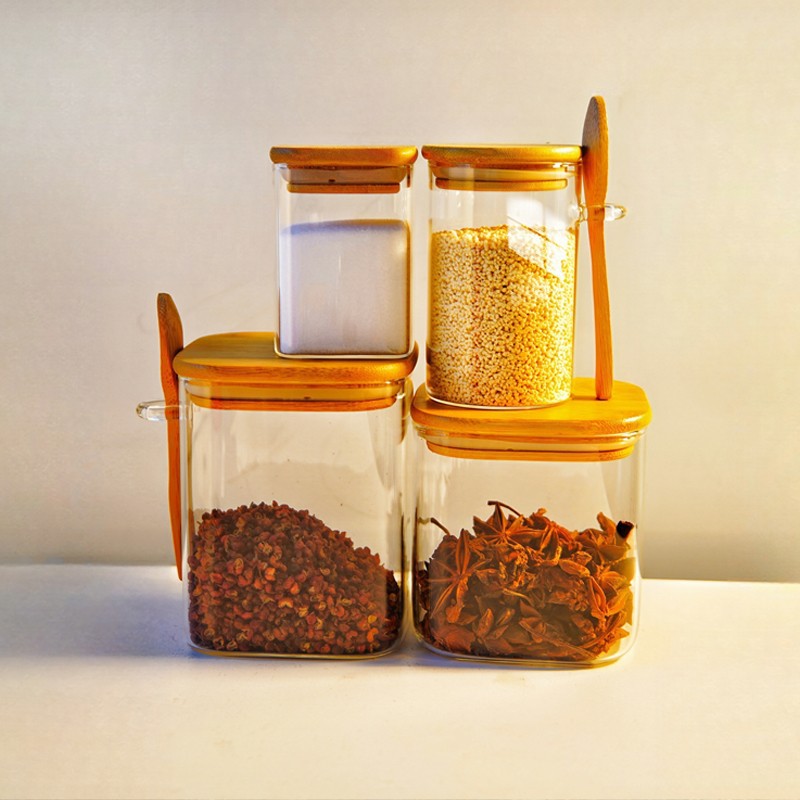

If you're in the market for high - quality transparent food storage jars that offer good UV protection, we're here to help. Whether you're a home cook looking to store your pantry staples or a business owner in the food industry, we have a wide range of products to meet your needs. Contact us to discuss your requirements and start a procurement negotiation. We're confident that our jars will exceed your expectations in terms of quality and performance.
References
- "Understanding UV Light and Its Effects on Food" - Journal of Food Science
- "Properties of Glass and Plastic for Food Storage" - Packaging Technology Review
- "Testing Methods for UV Blocking in Transparent Containers" - Consumer Product Safety Research