

High borosilicate glass has gained significant popularity in the production of tea cups due to its purported excellent heat - resistant properties. As a supplier of High Borosilicate Tea Cups, I am often asked about the heat - resistant coefficient of these cups. In this blog, we will delve into the science behind high borosilicate glass and explore whether high borosilicate tea cups truly have a good heat - resistant coefficient.
Understanding High Borosilicate Glass
High borosilicate glass is a type of glass that contains a relatively high proportion of boron trioxide (B₂O₃) and silica (SiO₂). The typical composition of high borosilicate glass may include around 70 - 80% silica, 7 - 13% boron trioxide, and small amounts of other oxides such as sodium oxide (Na₂O), potassium oxide (K₂O), and aluminum oxide (Al₂O₃).
The unique chemical composition of high borosilicate glass gives it several remarkable properties. One of the key features is its low coefficient of thermal expansion. The coefficient of thermal expansion (CTE) is a measure of how much a material expands when heated. For high borosilicate glass, the CTE is typically in the range of 3.2 - 3.3 × 10⁻⁶ /K. In contrast, ordinary soda - lime glass, which is commonly used in household items, has a CTE of around 9 × 10⁻⁶ /K.
The Significance of Low Thermal Expansion in Heat Resistance
A low coefficient of thermal expansion is crucial for heat - resistant applications. When a material is heated, it expands. If the material has a high CTE, the rapid expansion can cause internal stresses within the material. These stresses can lead to cracking or even shattering of the material, especially when there is a sudden change in temperature, such as pouring hot water into a cold cup.
High borosilicate glass, with its low CTE, can withstand significant temperature changes without experiencing excessive expansion. This means that high borosilicate tea cups can be filled with hot liquids, even boiling water, without the risk of cracking. For example, if you pour boiling water (100°C) into a high borosilicate tea cup at room temperature (around 20°C), the cup can handle this large temperature difference without breaking.
Testing the Heat - Resistant Coefficient of High Borosilicate Tea Cups
To ensure the quality and heat - resistant performance of our high borosilicate tea cups, we conduct a series of tests. One of the common tests is the thermal shock test. In this test, the tea cups are first heated to a high temperature, usually around 150 - 200°C, and then rapidly cooled by immersing them in cold water. High - quality high borosilicate tea cups should be able to withstand this thermal shock without any visible damage.
Another test is the long - term heat exposure test. We place the tea cups in an oven at a constant high temperature, such as 250°C, for several hours. After the test, we check the cups for any signs of deformation, cracking, or changes in transparency. Our high borosilicate tea cups have consistently passed these tests, demonstrating their excellent heat - resistant properties.
Applications and Advantages of High Borosilicate Tea Cups in the Tea - Drinking Experience
The heat - resistant nature of high borosilicate tea cups makes them ideal for tea lovers. Tea is often brewed with hot water, and high borosilicate tea cups can maintain the temperature of the tea for a longer time compared to other materials. The transparency of high borosilicate glass also allows tea drinkers to enjoy the visual appeal of the tea leaves unfurling and the color of the brewed tea.
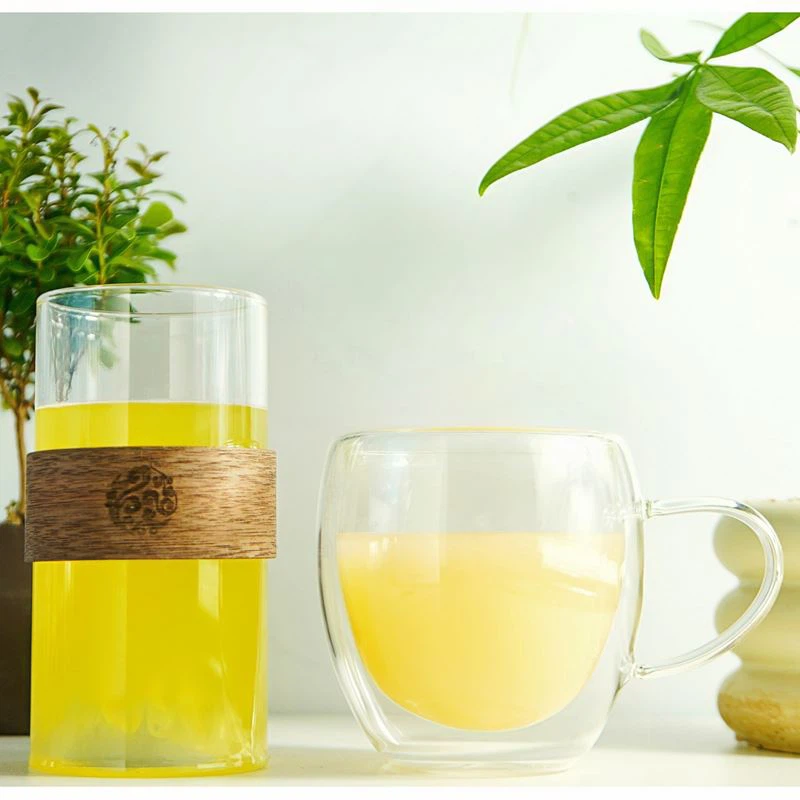

In addition to their heat - resistant properties, high borosilicate tea cups are also eco - friendly. They are made from natural materials and can be recycled. If you are interested in our eco - friendly options, you can check out our Eco Friendly Borosilicate Glass Cup.
We also offer Colorful Decal Glass Tea Cup for those who want a more aesthetically pleasing option. These cups combine the heat - resistant properties of high borosilicate glass with beautiful decals, adding a touch of style to your tea - drinking experience.
Comparing High Borosilicate Tea Cups with Other Materials
When compared to other materials used for tea cups, such as ceramic, porcelain, and stainless steel, high borosilicate glass has its own set of advantages.
Ceramic and porcelain tea cups are also popular, but they are more prone to chipping and cracking. They may not be able to withstand sudden temperature changes as well as high borosilicate glass. Stainless steel tea cups, on the other hand, can retain heat well, but they do not allow you to see the tea inside. High borosilicate tea cups offer a balance of heat resistance, transparency, and aesthetic appeal.
Quality Control in the Production of High Borosilicate Tea Cups
As a supplier of High Borosilicate Tea Cup, we have strict quality control measures in place. From the selection of raw materials to the final inspection of the finished products, every step is carefully monitored.
We source high - quality high borosilicate glass from reliable suppliers. During the manufacturing process, we use advanced techniques to ensure the uniformity of the glass and the precision of the cup's shape. After production, each tea cup undergoes a comprehensive inspection to check for any defects, such as bubbles, scratches, or uneven thickness.
Conclusion
In conclusion, high borosilicate tea cups do have a good heat - resistant coefficient. Their low coefficient of thermal expansion allows them to withstand large temperature differences without cracking or shattering. This makes them an excellent choice for tea lovers who want to enjoy their hot beverages without the worry of damaging their cups.
If you are interested in purchasing high - quality high borosilicate tea cups for your business or personal use, we invite you to contact us for procurement discussions. We offer a wide range of high borosilicate tea cups, including the Eco Friendly Borosilicate Glass Cup and Colorful Decal Glass Tea Cup. Our team is ready to provide you with detailed product information and assist you in making the right choice.
References
- "Glass Science and Technology" by D. R. Uhlmann and N. J. Kreidl
- "Handbook of Glass Properties" edited by P. W. McMillan