

High borosilicate glass is well - known for its excellent heat - resistance and chemical stability. As a supplier of high borosilicate teapots, I often receive inquiries about whether these teapots can be used for making herbal tea. In this blog, I will delve into the suitability of high borosilicate teapots for herbal tea brewing, discussing their advantages, potential drawbacks, and other related aspects.
Advantages of Using High Borosilicate Teapots for Herbal Tea
1. Heat Resistance
High borosilicate glass has a low coefficient of thermal expansion, which means it can withstand rapid temperature changes without cracking. When making herbal tea, we usually pour boiling water into the teapot. A high borosilicate teapot can handle this sudden temperature increase without any issues. For example, if you take a cold teapot and immediately pour boiling water into it, a high borosilicate teapot will remain intact, while ordinary glass teapots may shatter. This heat - resistance property ensures that the teapot can be used safely for multiple rounds of herbal tea brewing, making it a reliable choice for tea lovers.
2. Chemical Inertness
One of the most important factors when brewing herbal tea is to ensure that the container does not react with the herbs. High borosilicate glass is chemically inert, which means it will not leach any harmful substances into the herbal tea. Herbal teas are often valued for their natural and healthy properties. Using a high borosilicate teapot ensures that the purity and quality of the herbal tea are maintained. Unlike some metal teapots that may react with the acidic or alkaline components in the herbs, high borosilicate glass keeps the herbal tea free from any unwanted chemical reactions.
3. Visibility
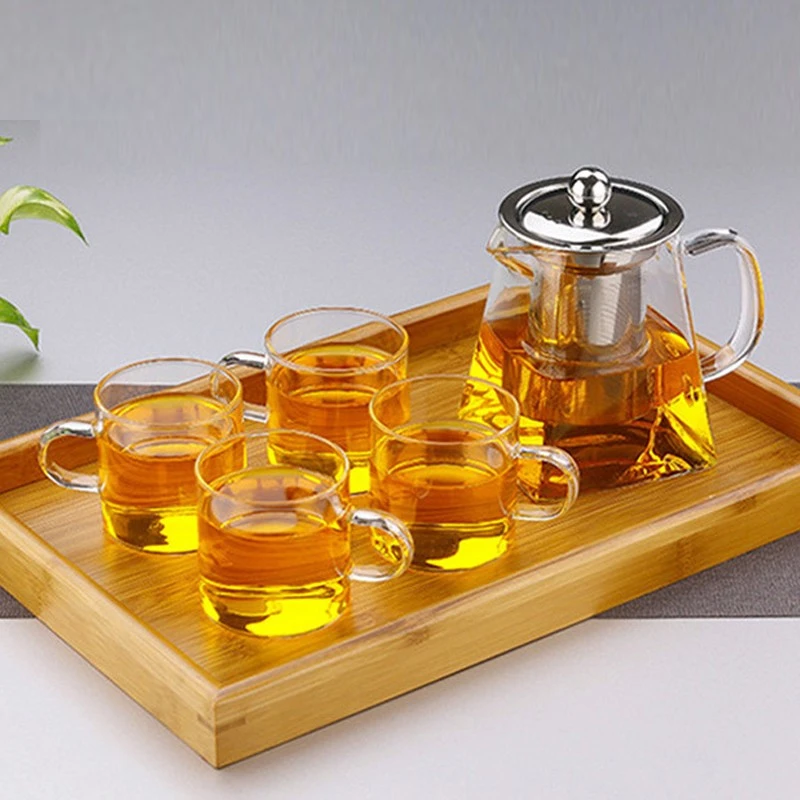
The transparency of high borosilicate glass allows you to observe the brewing process of herbal tea. You can see how the herbs expand, release their flavors, and change the color of the water. This visual experience adds to the enjoyment of making and drinking herbal tea. You can also tell when the tea has reached the desired strength by observing the color and clarity of the liquid. For instance, if you are brewing chamomile tea, you can watch as the yellow - gold color develops, indicating that the beneficial compounds are being extracted from the chamomile flowers.
4. Easy to Clean
High borosilicate teapots are relatively easy to clean. Since the glass surface is smooth, residues from herbal tea do not stick easily. You can simply rinse the teapot with warm water and a mild detergent after each use. This ease of cleaning helps to maintain the hygiene of the teapot and ensures that there is no lingering flavor from previous brews that could affect the taste of the next batch of herbal tea.

Potential Drawbacks
1. Fragility
Although high borosilicate glass is more resistant to thermal shock than ordinary glass, it is still relatively fragile compared to materials like ceramic or stainless steel. If dropped or knocked against a hard surface, it can break. However, with proper care and handling, this drawback can be minimized. You can place a soft mat under the teapot on the table to prevent accidental damage, and avoid rough handling during cleaning or storage.
2. Heat Retention
High borosilicate glass is not as good at retaining heat as some other materials. Herbal tea may cool down faster in a high borosilicate teapot compared to a ceramic or insulated teapot. This can be a concern if you like to savor your herbal tea slowly over a long period. To address this issue, you can use a tea cozy or an insulated sleeve to help keep the tea warm for a longer time.
Different Types of High Borosilicate Teapots for Herbal Tea
1. High Borosilicate Glass Teapot with Filter
The High Borosilicate Glass Teapot with Filter is an ideal choice for brewing herbal tea. The filter allows you to separate the herbs from the brewed tea, making it easier to drink without having to worry about getting herbs in your mouth. This type of teapot is especially useful when brewing loose - leaf herbs. You can simply place the herbs in the filter basket, pour in the hot water, and let the tea steep. Once the tea is ready, you can lift the filter basket out of the water to stop the steeping process.
2. Household Glass Teapot with Lid
The Household Glass Teapot with Lid is a classic option for making herbal tea at home. The lid helps to keep the heat in during the brewing process, enhancing the extraction of flavors from the herbs. It also prevents dust and other contaminants from entering the teapot. This type of teapot is suitable for both single - serving and family - sized batches of herbal tea.
3. High Borosilicate Teapot
The High Borosilicate Teapot offers all the benefits of high borosilicate glass for herbal tea brewing. Its simple design makes it a versatile choice for different types of herbal teas. Whether you are brewing a delicate mint tea or a strong echinacea tea, this teapot can handle the task well.
Tips for Brewing Herbal Tea in a High Borosilicate Teapot
1. Pre - heat the Teapot
To prevent thermal shock and ensure better heat retention during brewing, it is advisable to pre - heat the high borosilicate teapot. You can do this by rinsing the teapot with hot water before adding the herbs and boiling water.
2. Use the Right Amount of Herbs
The amount of herbs used depends on personal preference and the type of herb. As a general rule, use about 1 - 2 teaspoons of dried herbs per 8 ounces of water. For fresh herbs, use a slightly larger amount, around 2 - 3 teaspoons.
3. Control the Brewing Time
Different herbs require different brewing times. For example, chamomile tea usually needs about 5 - 7 minutes of brewing time, while ginger tea may need 10 - 15 minutes to fully extract the flavors and beneficial compounds. Over - brewing can result in a bitter taste, so it is important to follow the recommended brewing times.
Conclusion
In conclusion, high borosilicate teapots are a great choice for making herbal tea. Their heat - resistance, chemical inertness, visibility, and ease of cleaning make them suitable for daily use. Although they have some potential drawbacks such as fragility and less heat retention, these can be managed with proper care and additional accessories.
If you are interested in purchasing high - quality high borosilicate teapots for making herbal tea or other tea types, please feel free to contact us for more information and start a procurement negotiation. We are committed to providing you with the best products and services.
References
- "The Chemistry of Glass" by John E. Shelby
- "Tea Brewing Guide" by The Tea Association of the United States