

Are borosilicate clear glass jars recyclable?
As a supplier of borosilicate clear glass jars, I often get asked about the recyclability of these products. It's a crucial question, not only from an environmental perspective but also for consumers who are increasingly conscious of their ecological footprint. In this blog, I'll delve into the recyclability of borosilicate clear glass jars, exploring the science behind it and offering insights into the recycling process.
What are Borosilicate Clear Glass Jars?
Borosilicate glass is a type of glass that contains boron trioxide, which gives it unique properties compared to regular soda - lime glass. It has a low coefficient of thermal expansion, making it highly resistant to thermal shock. This means it can withstand rapid temperature changes without cracking or shattering. Borosilicate clear glass jars are commonly used for storing food, cosmetics, and other items due to their transparency, durability, and chemical resistance.
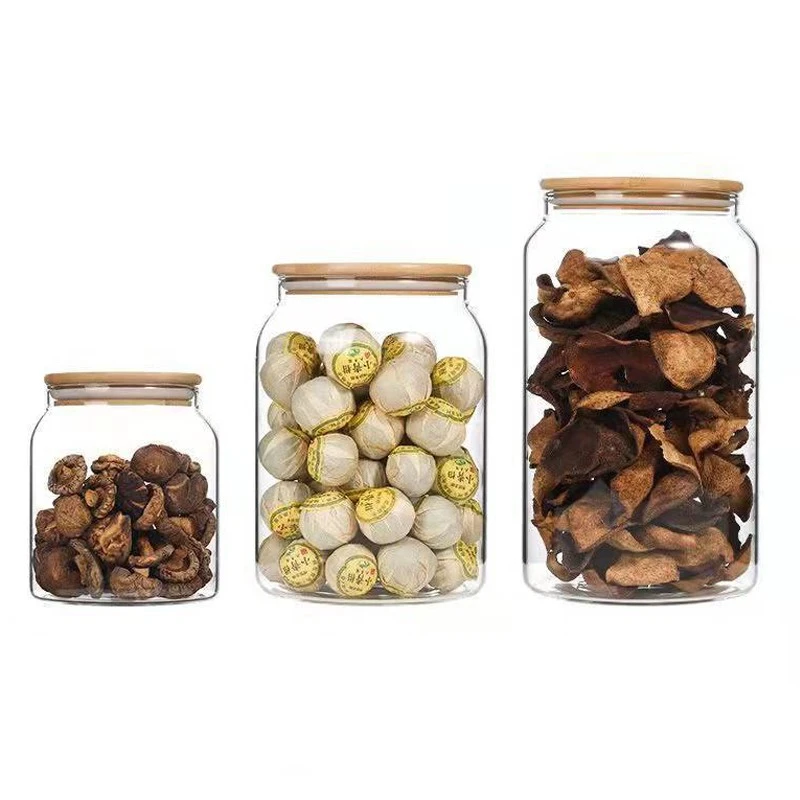
Our company offers a range of borosilicate clear glass jars, such as the High Borosilicate Candy Jar, Glass Storage Jar with Bamboo Lid, and Bamboo Lid Borosilicate Storage Jar. These jars are not only functional but also aesthetically pleasing, adding a touch of elegance to any space.

The Recyclability of Borosilicate Glass
The good news is that borosilicate glass is recyclable. Like other types of glass, it can be melted down and remanufactured into new glass products. However, there are some challenges associated with recycling borosilicate glass compared to regular soda - lime glass.
One of the main issues is the difference in composition. Borosilicate glass has a higher percentage of boron trioxide and other additives, which can affect the melting process. When recycling borosilicate glass, it needs to be separated from other types of glass to ensure the quality of the recycled product. If borosilicate glass is mixed with soda - lime glass during the recycling process, it can contaminate the batch and make it difficult to produce high - quality recycled glass.
Another challenge is the availability of recycling facilities that can handle borosilicate glass. While many recycling centers accept regular glass, not all of them have the equipment and expertise to recycle borosilicate glass. This means that in some areas, it may be more difficult to find a place to recycle borosilicate clear glass jars.
The Recycling Process of Borosilicate Glass
The recycling process of borosilicate glass typically involves several steps. First, the glass jars are collected from consumers or businesses. They are then sorted based on their type and color. Borosilicate glass needs to be separated from other types of glass to prevent contamination.
Next, the sorted glass is crushed into small pieces called cullet. The cullet is then washed to remove any impurities, such as labels, dirt, and other debris. After washing, the cullet is melted in a furnace at high temperatures. The melting point of borosilicate glass is higher than that of soda - lime glass, usually around 1500 - 1600 degrees Celsius.
Once the glass is melted, it can be molded into new products. The recycled borosilicate glass can be used to make a variety of items, including new glass jars, laboratory equipment, and other glassware.
Benefits of Recycling Borosilicate Clear Glass Jars
Recycling borosilicate clear glass jars offers several benefits. From an environmental perspective, it helps to conserve natural resources. Glass is made from sand, soda ash, and limestone, which are non - renewable resources. By recycling glass, we can reduce the demand for these raw materials and minimize the environmental impact of glass production.
Recycling also reduces energy consumption. It takes less energy to melt recycled glass than to produce new glass from raw materials. According to some studies, recycling glass can save up to 30% of the energy required for virgin glass production.
In addition, recycling borosilicate clear glass jars helps to reduce waste in landfills. Glass is a non - biodegradable material, and if it is not recycled, it can take thousands of years to decompose. By recycling glass, we can divert it from landfills and contribute to a more sustainable future.
How Consumers Can Recycle Borosilicate Clear Glass Jars
As a supplier, I encourage consumers to recycle their borosilicate clear glass jars. Here are some tips on how consumers can recycle these jars effectively:
- Check local recycling guidelines: Before recycling, consumers should check with their local recycling center to see if they accept borosilicate glass. Some recycling centers may have specific requirements or restrictions for recycling borosilicate glass.
- Separate the glass from other materials: Consumers should remove any lids, labels, or other non - glass components from the jars before recycling. This helps to ensure that the glass is clean and ready for recycling.
- Store the glass safely: When storing borosilicate clear glass jars for recycling, consumers should handle them carefully to avoid breakage. Broken glass can be dangerous and may not be accepted by recycling centers.
Conclusion
In conclusion, borosilicate clear glass jars are recyclable, but there are some challenges associated with the recycling process. While it is important to separate borosilicate glass from other types of glass and find a suitable recycling facility, the benefits of recycling are significant. By recycling borosilicate clear glass jars, we can conserve natural resources, reduce energy consumption, and minimize waste in landfills.
If you are interested in purchasing high - quality borosilicate clear glass jars, we offer a wide range of products to meet your needs. Whether you need a High Borosilicate Candy Jar for storing your favorite treats or a Glass Storage Jar with Bamboo Lid for organizing your pantry, we have the perfect solution for you. Please feel free to contact us for more information and to discuss your purchasing requirements.
References
- "Glass Recycling: An Overview." Environmental Protection Agency.
- "Properties and Applications of Borosilicate Glass." Journal of Glass Science and Technology.
- "The Energy Benefits of Recycling Glass." American Chemistry Council.